




Key Highlights
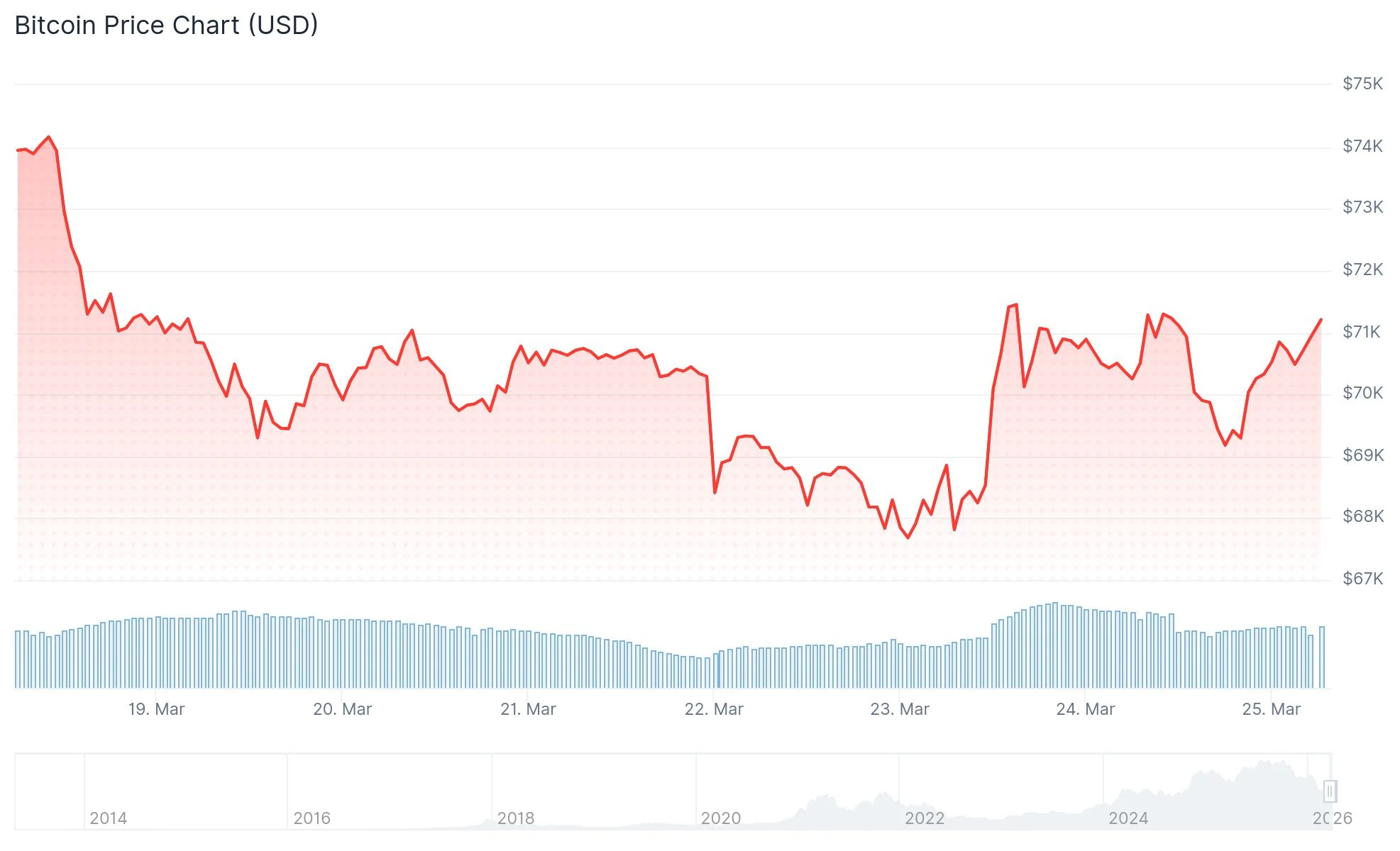
- BTC experienced a 0.4% decline to approximately $70,475 amid contradictory ceasefire reports involving the U.S. and Iran.
- Investment firm Bernstein maintains that Bitcoin has established its bottom, attributing recent weakness to sentiment shifts rather than structural issues.
- Crude oil prices exceeding $85–$90 have intensified inflation concerns, driving capital toward safe havens and away from volatile assets like Bitcoin.
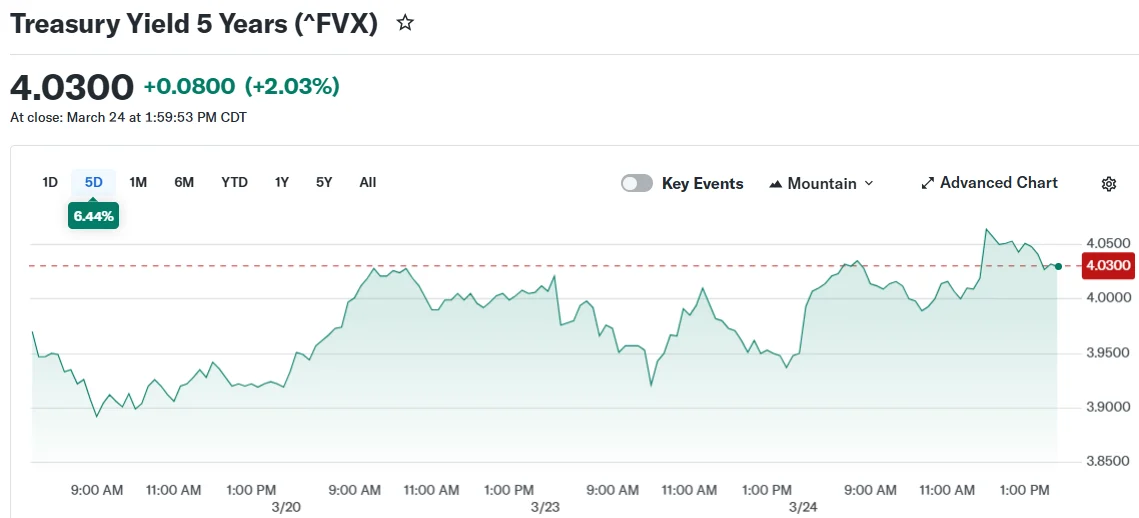
- The U.S. 5-year Treasury yield reached 4.10%, marking a 9-month peak, while July rate hike probabilities climbed to 20.5%.
- Since late February’s Iran conflict escalation, Bitcoin has delivered a 25% performance advantage over gold, per Bernstein data.
The world’s leading cryptocurrency retreated 0.4% during Tuesday’s trading session, settling around $70,475 after surrendering gains from the prior day. Market participants remained cautious as conflicting narratives emerged regarding potential diplomatic progress between Washington and Tehran.
Reports surfaced from Israeli Channel 12 suggesting that U.S. special envoy Steve Witkoff and Jared Kushner were advancing a comprehensive 15-point ceasefire framework. The New York Times corroborated these developments, indicating the U.S. had transmitted an official proposal to Iranian authorities.
However, Iran’s parliamentary leadership swiftly contradicted these claims, labeling the reports as unfounded. This diplomatic uncertainty created a headline-driven trading environment where markets reacted to speculation rather than confirmed developments.
President Trump announced on Monday a five-day postponement of planned strikes targeting Iran’s energy sector following what he characterized as constructive diplomatic exchanges. Despite this temporary reprieve, crude oil markets rebounded sharply on Tuesday as geopolitical risks remained elevated.
Deteriorating Macro Environment Pressures Digital Assets
Crude oil breaching the $90 threshold has amplified inflation expectations across financial markets. Fixed income data revealed a dramatic shift in Federal Reserve policy expectations, with implied probabilities for a July rate increase surging from zero to 20.5% within seven days.
The benchmark U.S. 5-year Treasury yield advanced to 4.10%, representing the highest level recorded in nine months. Equity markets reflected this risk-off sentiment, with the S&P 500 touching its weakest point since mid-October during Monday’s session as investors rotated heavily into cash positions.
Leading technology equities including Google, Meta, and IBM have experienced corrections exceeding 10% over the preceding six-week period. Compounding these concerns, the U.S. federal debt surpassed the $39 trillion threshold, intensifying pressure on household purchasing power.
B2 Ventures founder Arthur Azizov observed: “There is a growing sense in the market that traditional assets are becoming more speculative than crypto, which is not a positive signal.”
Investment Firm Bernstein Identifies Bitcoin Price Floor
Countering prevailing pessimism, Bernstein’s research team expressed confidence that Bitcoin has established a definitive price floor. Analyst Gautam Chhugani and colleagues stated: “We believe Bitcoin has found its trough and is now heading higher.”
The research team characterized the recent price weakness as a recalibration of market sentiment rather than evidence of deteriorating fundamentals. Their analysis highlighted Bitcoin’s superior performance trajectory, noting a 25% outperformance versus gold since the Iran situation intensified in late February.
Bernstein reaffirmed its outperform rating on Strategy, maintaining a $450 price objective. The Michael Saylor-led company maintains Bitcoin holdings representing approximately 3.6% of total supply, currently valued near $53.5 billion.
Prediction market Polymarket shows traders predominantly expecting conflict resolution by June 2026.
Bitcoin tested critical support at $67,500 during Monday’s session. Technical analysts identify the $66,000 level as a crucial zone that could come under pressure if inflation concerns and monetary policy uncertainty persist.
