



TLDR
- Samsung’s shares soared over 15% during local market hours, propelling its market capitalization beyond $1 trillion — making it just the second Asian tech firm after TSMC to achieve this milestone.
- The explosive rally came on the heels of exceptional first-quarter performance, with operating profit climbing more than eightfold to reach ₩57.2 trillion ($39 billion).
- Booming artificial intelligence infrastructure demand for high-bandwidth memory (HBM) combined with severe shortages in DRAM and NAND supply are fueling the surge.
- Market enthusiasm intensified following a Bloomberg report suggesting Apple has initiated exploratory discussions with Samsung and Intel regarding U.S.-based chip manufacturing.
- Rival chipmaker SK Hynix similarly climbed over 10%, contributing to South Korea’s Kospi index breaking through 7,000 for the first time in history.
Samsung’s shares are headed toward their largest single-session advance ever recorded, propelled by exceptional first-quarter financial results and surging artificial intelligence-fueled semiconductor demand.
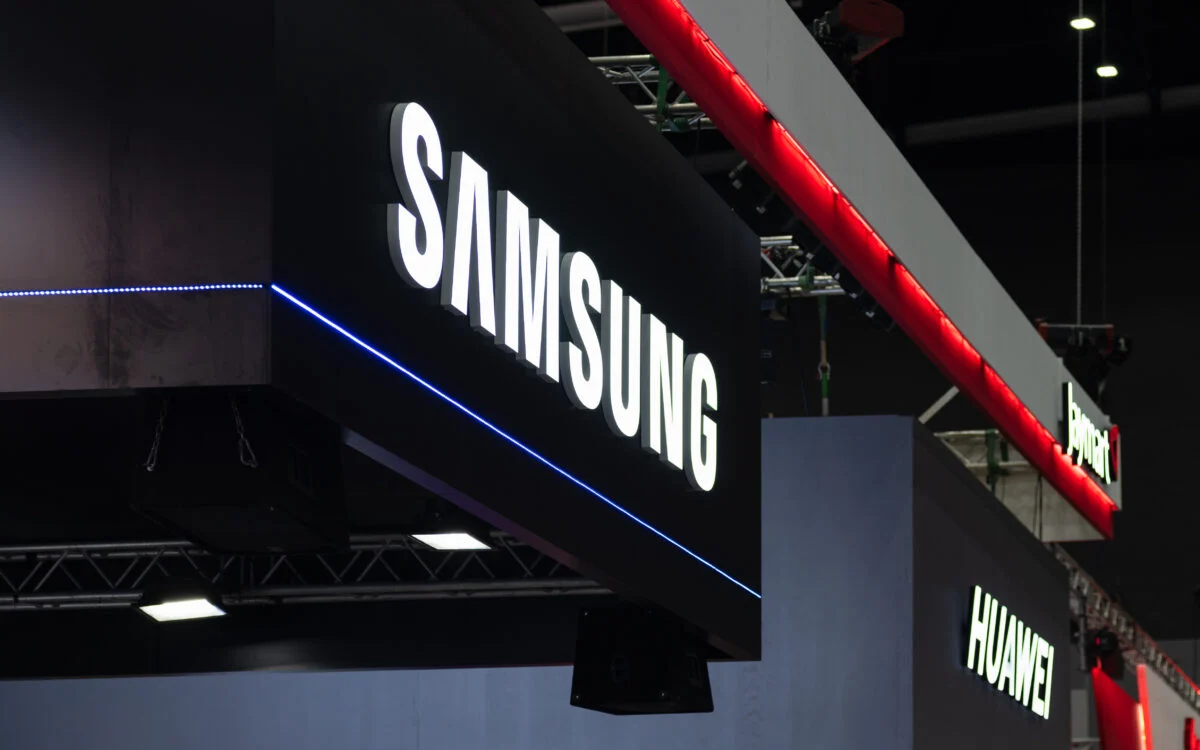
During Wednesday’s trading session in Seoul, the stock catapulted more than 15% higher, pushing the company’s total market capitalization past the $1 trillion threshold. This achievement positions Samsung as only the second East Asian corporation to attain this prestigious valuation level, following Taiwan Semiconductor Manufacturing Company.
Samsung Electronics Co., Ltd., SMSD.L
The remarkable share price movement follows Samsung’s disclosure last week of first-quarter operating profit totaling ₩57.2 trillion — representing an astonishing increase of more than eight times compared to the same period last year. Quarterly revenue reached a historic peak of ₩133.9 trillion. Remarkably, Samsung’s profit from just this three-month period exceeded the company’s entire 2025 full-year profit figure of ₩43.6 trillion.
Additional momentum came from a Bloomberg report indicating that Apple has engaged in preliminary conversations with both Samsung and Intel regarding potential chip production arrangements within the United States. Such a development would represent a significant departure from Apple’s established dependence on TSMC for semiconductor manufacturing.
SK Hynix, Samsung’s primary competitor in memory chip production, experienced a similar surge of more than 10% on Wednesday. The simultaneous rallies propelled South Korea’s flagship Kospi index past the 7,000 threshold for the first time in the market’s history — an unprecedented achievement.
AI Hunger Driving Memory Shortfall
Morningstar analyst Yu Jing Jie offered a straightforward assessment: the industry is experiencing an acute shortage of DRAM and NAND chips driven by the voracious memory requirements of AI computing systems. Because establishing new semiconductor manufacturing capacity typically requires two to three years, supply constraints are expected to persist for the foreseeable future.
This dynamic creates favorable conditions for Samsung’s profit margins. According to Rolf Bulk from The Futurum Group, elevated memory pricing and robust earnings performance should continue even as additional manufacturing facilities across the semiconductor industry become operational over the coming years.
Client reception of Samsung’s newest HBM4 chip technology has been encouraging, Bulk noted. HBM4 represents the sixth and most advanced generation of high-bandwidth memory technology and is anticipated to serve as a critical component in Nvidia’s forthcoming Vera Rubin AI platform architecture.
In February, Samsung announced it had become the industry’s first manufacturer to initiate mass production of HBM4 chips, with shipments already being delivered to customers whose identities remain confidential.
Samsung vs. SK Hynix
SK Hynix maintains dominance in the HBM marketplace with approximately 55% market share. Samsung commands roughly 25% of the segment. However, Bulk indicated that investors have become less concerned about this competitive differential, primarily because profitability from conventional DRAM products has recently exceeded HBM margin performance.
Across the broader semiconductor sector, Micron surged 11%, AMD climbed more than 16% in extended trading following a robust first-quarter earnings report, and Intel advanced nearly 13%.
Chaiwon Lee, an analyst at Life Asset Management, observed that Samsung currently trades at approximately six times forward twelve-month price-to-earnings ratio — representing a substantial discount compared to TSMC’s roughly 25 times multiple and Micron’s approximately 10 times valuation. While acknowledging potential headwinds including intensifying competition from Chinese manufacturers and the possibility of cooling AI demand, Lee suggested the valuation disparity indicates potential for further appreciation.
According to FactSet data, Samsung’s stock was positioned to close Wednesday’s session at an all-time high.
