



TLDR
- Spot gold declined more than 1% Friday, reaching four-week lows
- Prices have tumbled approximately 13% since the US-Iran conflict intensified in late February
- Major central banks, including the Federal Reserve, ECB, and Bank of England, have hinted at potential interest rate increases
- Tehran’s Supreme Leader reaffirmed Iran’s intention to maintain control over the Strait of Hormuz
- Despite current headwinds, market experts maintain a positive medium-term outlook for gold
The precious metal experienced another challenging trading session Friday, with spot gold tumbling as much as 1.2% to approximately $4,570 per ounce, marking its weakest performance in roughly four weeks.
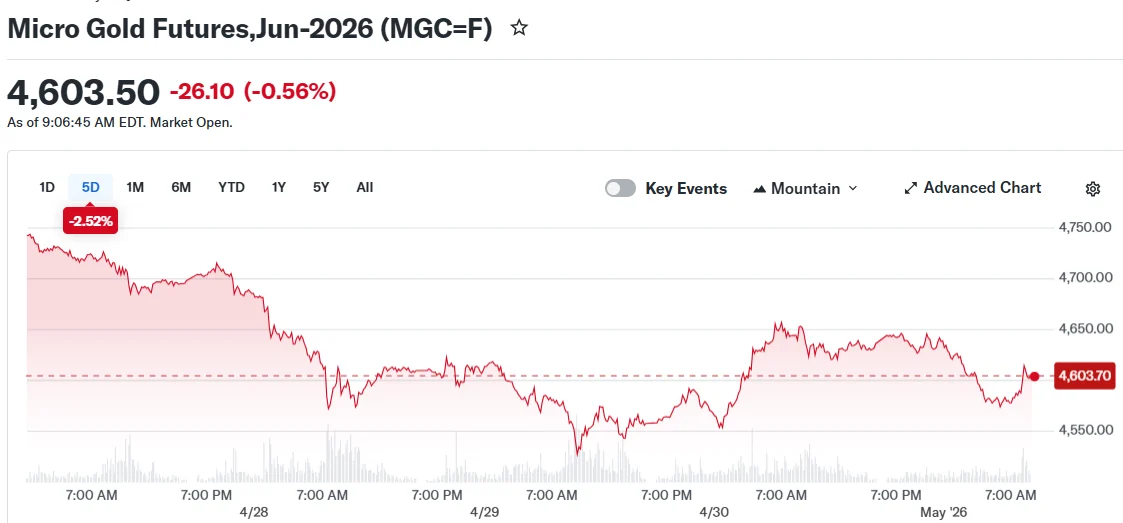
This latest selloff extends a difficult period for bullion, which posted losses of about 1% throughout April and suffered an even steeper 12% decline in March. From the onset of escalating US-Iran hostilities in late February, gold has surrendered roughly 13% of its market value.
The ongoing conflict has driven oil prices significantly higher, triggering widespread inflation anxieties among the world’s largest economies. This energy-led price surge has redirected investor attention toward the greenback and away from traditional precious metal holdings.
The United States dollar has emerged as the primary safe-haven instrument since tensions flared, displacing gold from the protective role it historically occupies during periods of international instability.
Central Banks Signal Higher Rates
Key Federal Reserve officials expressed serious concerns this week regarding inflation driven by escalating energy costs. Meanwhile, the European Central Bank, Bank of England, and Bank of Japan have all suggested they may implement interest rate increases in the coming months.
Rising interest rates create unfavorable conditions for gold investments. Elevated rates increase the opportunity cost of maintaining positions in non-interest-bearing assets like physical bullion, making government bonds and cash deposits comparatively more appealing to investors.
Analysts at Citigroup indicated in a recent research note that downward pressure on gold could persist in the immediate future as Middle Eastern geopolitical uncertainties continue.
Bullion did experience a temporary rally Thursday following a sharp appreciation in the Japanese yen, which market observers attribute to likely government market intervention. A declining dollar typically provides support for gold prices since the commodity is denominated in US currency.
Iran Digs In on Hormuz
President Donald Trump announced his administration would continue enforcing a naval blockade against Iran and received briefings from military leadership regarding additional strategic options. Diplomatic efforts between Washington and Tehran have thus far failed to produce meaningful progress.
Iran’s Supreme Leader Mojtaba Khamenei released a declaration Thursday affirming Tehran’s determination to retain authority over the Strait of Hormuz. He additionally emphasized Iran’s commitment to safeguarding its nuclear capabilities and ballistic missile programs.
Khamenei argued that Iranian oversight of the Hormuz waterway would deliver stability and economic advantages to Persian Gulf states. His remarks came after reports emerged that Trump had dismissed an Iranian overture to reopen the strategic passage.
Tehran has effectively sealed off the Strait of Horsuz since hostilities intensified in late February. This narrow waterway serves as an essential corridor for international petroleum transport.
Market activity Friday remained subdued compared to typical volumes, as public holidays throughout much of Asia limited trading participation.
Silver posted gains of approximately 1.4% to reach $74.10 per ounce. Both platinum and palladium registered modest advances as well.
Notwithstanding current market pressures, the consensus among analysts leans decidedly optimistic regarding gold’s trajectory. Recent World Gold Council statistics revealed that global central banks expanded their gold reserves during the first quarter at the most aggressive rate in more than twelve months.
Greg Shearer, JPMorgan’s head of precious metals research, noted that robust retail demand in China has provided underlying price support, while central bank acquisition activity continues uninterrupted.
