




Contents
Key Takeaways
- Tech titans Microsoft, Google, and IBM are pouring resources into quantum computing development, though none have turned it into significant revenue yet
- Microsoft leverages Azure Quantum for cloud-based quantum access, earning predominantly Buy recommendations from analysts
- Google dominates quantum research innovation but has yet to establish a concrete monetization strategy
- IBM boasts the most comprehensive quantum development timeline and extensive enterprise collaboration ecosystem
- Analyst consensus tilts toward Buy across all three companies, though quantum represents a multi-year investment thesis rather than immediate earnings catalyst
The quantum computing revolution has transitioned from science fiction to serious investment consideration—emerging as one of the most scrutinized sectors in modern financial markets. As technology behemoths and niche innovators compete to unlock quantum supremacy, savvy investors are staking positions in what analysts project could become a multi-trillion-dollar ecosystem.
The transformative potential spans encryption systems, pharmaceutical development, and complex computational challenges beyond classical computer capabilities. Wall Street has taken notice, with institutional interest growing substantially.
By 2026, the quantum computing narrative has evolved from wild speculation to calculated portfolio strategy. Investment commitments are expanding, collaborative ventures are multiplying, and preliminary commercial applications are materializing. Yet with enthusiasm occasionally exceeding tangible progress, discerning companies with authentic long-term viability becomes critical.
This analysis examines the premier quantum computing stocks worth monitoring in 2026—showcasing Wall Street’s preferred selections, the underlying technology driving them, and which corporations stand ready to capitalize as the quantum computing age unfolds.
Microsoft
Microsoft’s quantum initiative operates primarily through its Azure infrastructure. Azure Quantum provides enterprises and programmers with remote access to diverse quantum computing systems. Additionally, the corporation pursues topological qubit research, engineered for enhanced stability compared to existing alternatives.
Microsoft Corporation, MSFT
Currently, quantum computing represents a minimal fraction of Microsoft’s total operations. Wall Street analysts concentrate predominantly on Azure’s cloud expansion and enterprise software performance when assessing valuation. However, embedding quantum capabilities within Azure positions Microsoft to capture emerging market demand independent of hardware innovations.
Analyst sentiment toward Microsoft remains decidedly bullish. The equity commands a Strong Buy consensus rating, with the majority of analysts recommending Buy positions and minimal Hold or Sell designations.
Google conducts quantum development through its Google Quantum AI laboratory. The organization has established itself as a research powerhouse, demonstrating preliminary performance milestones. Investment continues in enhancing qubit fidelity and error mitigation techniques.
Contrary to Microsoft’s approach, Google lacks a clearly articulated commercial quantum platform. While cloud-based access exists, the revenue generation strategy remains ambiguous.
Analyst perspectives on Alphabet lean positive overall, featuring considerable Buy ratings. Nevertheless, the stock receives more neutral assessments compared to Microsoft, partially reflecting concerns regarding advertising business fundamentals and absent quantum commercialization roadmap.
IBM
IBM represents the most established player among this trio. The company has released a detailed scaling blueprint for quantum infrastructure and operates the IBM Quantum network, connecting worldwide enterprise and academic collaborators.
International Business Machines Corporation, IBM
IBM concentrates on superconducting qubit architecture and has announced explicit targets for capability advancement and system expansion. Quantum computing occupies a more prominent position in IBM’s corporate narrative than for either Microsoft or Google.
Analyst opinions on IBM demonstrate greater equilibrium. The stock carries a Moderate Buy consensus, blending Buy and Hold recommendations. Certain analysts express reservation due to IBM’s comparatively modest growth trajectory relative to peer technology corporations.
Concluding Analysis
Quantum computing has yet to generate substantial revenue for any of these three organizations presently. IBM presents the most defined execution strategy, Microsoft wields the strongest platform ecosystem, and Google maintains the most advanced research capabilities.
Special Report: Additional Quantum Computing Stocks Beyond This Analysis
Our research examined significantly more Quantum Computing enterprises than those featured in this article.
The three companies discussed here represent merely a fraction — numerous others demonstrated comparable or superior potential, based on momentum analysis, expansion metrics, and comprehensive market positioning.
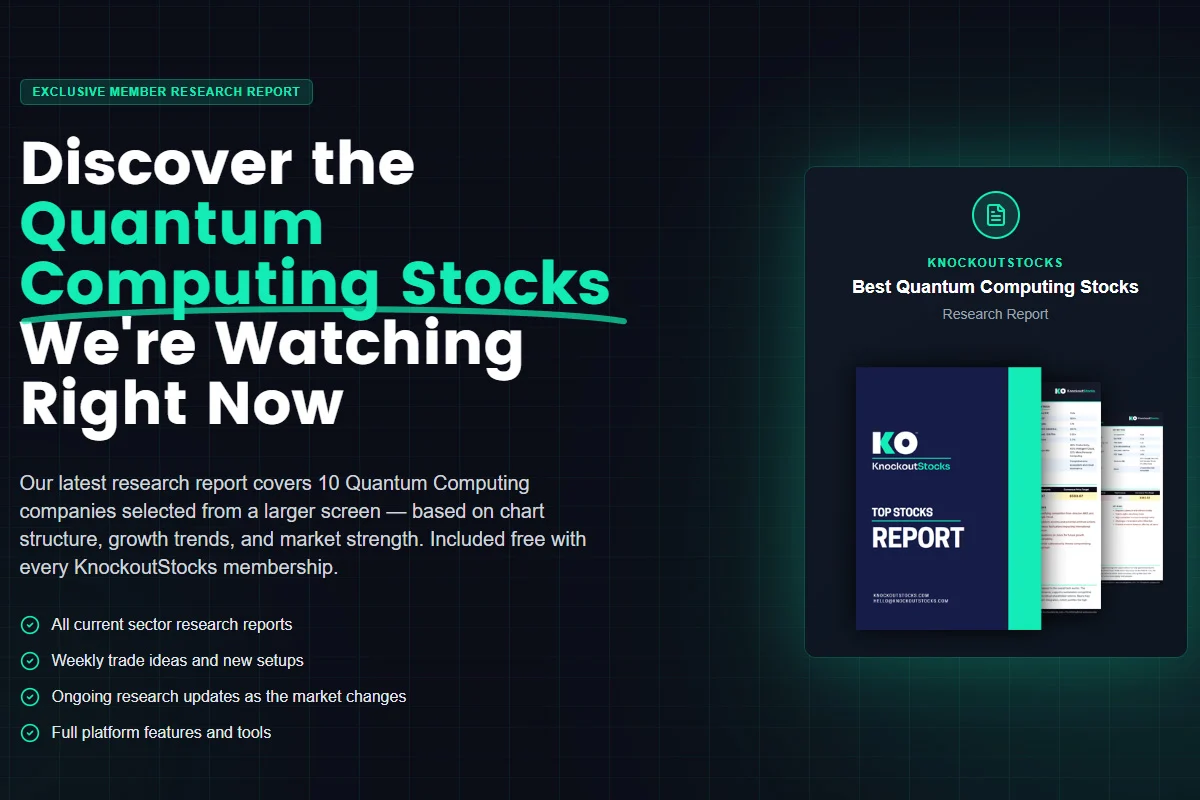
Several of these remain under-analyzed by mainstream coverage, precisely why they attracted our attention during comprehensive screening. Rather than releasing everything publicly, we compiled a dedicated report examining 10 Quantum Computing equities that presently exhibit elevated potential according to our proprietary rankings and current analysis.
This represents the identical watchlist we’re monitoring internally, complete with technical charts, critical price levels, and company-specific observations.
👉 To review the complete list before it gains wider recognition, you can obtain the Quantum Computing Stocks report here
