



Quick Overview
- Dutch TTF natural gas futures climbed as high as 2.4% during Wednesday trading
- President Trump prolonged the Iran ceasefire agreement while maintaining the Strait of Hormuz naval blockade
- Iranian Revolutionary Guards captured two commercial vessels in proximity to the Strait of Hormuz
- Approximately 20% of global LNG shipments transit through Hormuz, which continues to face effective closure
- European nations confront challenges refilling storage reserves during summer months amid competition with Asian markets for alternative gas sources
Traders in European natural gas markets experienced significant price fluctuations on Wednesday, with sessions concluding on an upward trajectory as market participants monitored Middle Eastern developments.
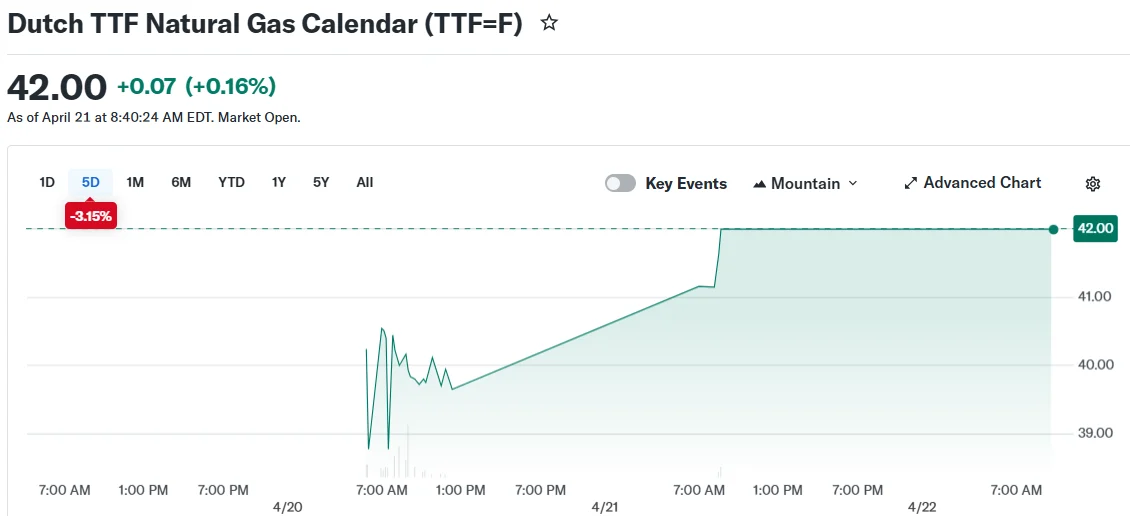
Front-month contracts at the Dutch TTF trading hub advanced by up to 2.4% to reach €42.94 per megawatt-hour during Amsterdam’s mid-morning trading period. These contracts had previously appreciated by over 8% across the preceding two trading sessions.
These market movements followed President Donald Trump’s confirmation of an extended ceasefire arrangement with Iran, announced shortly before the original agreement was scheduled to lapse. The extension came despite the cancellation of anticipated peace negotiations between the two nations.
Trump indicated that the United States would refrain from launching additional strikes against Iran. However, he emphasized that the naval blockade surrounding the Strait of Hormuz would continue until diplomatic discussions reach completion “one way or the other.”
A spokesperson for Iran’s foreign ministry verified the ceasefire extension during remarks broadcast on Iranian state television, as reported by the Associated Press.
Tensions escalated further in the strategic waterway after Iran’s paramilitary Islamic Revolutionary Guards Corps launched attacks and seized control of two commercial ships near the passage. According to a United Kingdom-based shipping monitoring service, one captured vessel was identified as a container ship.
President Trump additionally confirmed that the ongoing American blockade of Iranian coastal waters and ports would remain operational. Iran’s foreign minister has characterized the blockade as constituting an “act of war.” Trump contended that Iran is experiencing severe “financial collapse” and desires immediate reopening of the strait.
The Critical Role of Hormuz in Global Gas Markets
The Strait of Hormuz represents a narrow maritime passage located along Iran’s southern coastline. Under normal circumstances, approximately one-fifth of the world’s oil and liquefied natural gas shipments traverse this critical chokepoint.
Tanker traffic through the strait has experienced near-complete suspension since the commencement of coordinated U.S.-Israeli military operations against Iran in late February.
“Gas shipments will not resume through the Strait of Hormuz in the foreseeable future,” stated Florence Schmit, an energy strategist with Rabobank.
European Storage Capacity Challenges
Europe has now entered the summer season when countries traditionally replenish natural gas storage facilities in preparation for winter demand. With Hormuz remaining inaccessible, European buyers must now compete directly with Asian purchasers for alternative supply sources.
European markets have simultaneously contended with damage sustained by natural gas production infrastructure across the Middle East, with Qatar experiencing particularly significant disruptions.
Current benchmark pricing levels remain elevated compared to pre-conflict valuations, despite retreating from peak levels recorded during the previous month.
Schmit further observed that “the longer prices remain at current depressed levels, the greater the potential upside becomes once physical market realities assert themselves.”
The Wednesday seizure of two vessels near Hormuz by Iran’s Revolutionary Guards represented the most recent incident in a succession of attacks targeting commercial shipping in the region throughout the weekend, which had already intensified concerns regarding security in the waterway.
