




Key Highlights
- Iranian officials announced complete access to the Strait of Hormuz for commercial traffic during the ongoing ceasefire period
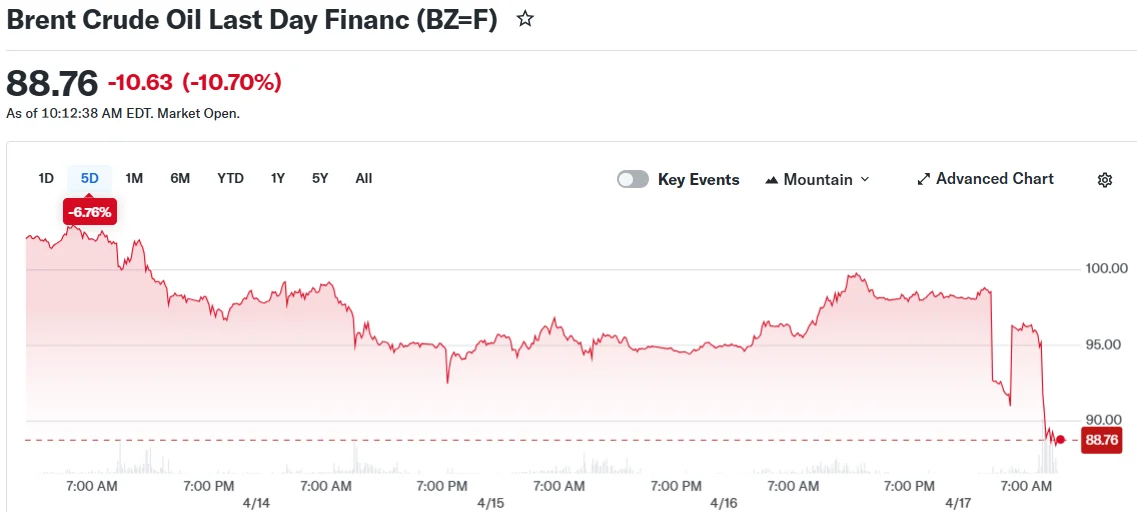
- Brent crude petroleum declined more than 10% to trade beneath the $90 threshold; WTI decreased to sub-$82 levels
- An Israel-Lebanon cessation of hostilities commenced Thursday afternoon at 5 p.m. Eastern Time for a 10-day duration
- Washington is exploring the possibility of unfreezing $20 billion in Iranian assets in exchange for Tehran’s enriched uranium stockpile
- President Trump verified that American naval operations surrounding Iran continue despite the waterway’s reopening
Petroleum markets experienced a dramatic downturn Friday following statements from Iran’s top diplomat, Abbas Araghchi, who confirmed that the strategically vital Strait of Hormuz had resumed full operations for commercial maritime traffic throughout the duration of the Israel-Lebanon truce.
Brent crude experienced losses exceeding 10%, settling near $88.65 per barrel. West Texas Intermediate similarly declined to levels below $82. Both major benchmarks had exceeded the $100 threshold earlier in the week.
Araghchi shared the statement via X, indicating the waterway stood “completely open for all commercial vessels” following predetermined routes established by Iranian maritime authorities.
President Trump subsequently issued his own communication through Truth Social, acknowledging the strait’s operational status. However, he emphasized that American naval enforcement operations targeting Iran “will remain in full force and effect” pending the completion of diplomatic negotiations with Tehran.
This announcement generated ambiguity among international shipping operators. Iranian state media indicated that maritime vessels traversing the strait must establish coordination protocols with Iran’s Revolutionary Guard Corps. Questions remained regarding the specific routing requirements for commercial traffic.
Ceasefire Implications for Diplomatic Progress
Thursday saw Trump reveal that Israeli and Lebanese authorities had reached consensus on a 10-day cessation of hostilities beginning at 5 p.m. Eastern Time. The president confirmed conversations with Lebanese President Joseph Aoun and Israeli Prime Minister Benjamin Netanyahu facilitated the breakthrough.
Israeli military actions in Lebanese territory targeting Hezbollah had persisted throughout U.S.-Iran diplomatic discussions, representing a significant impediment to comprehensive negotiations between Washington and Tehran.
While the Lebanese truce eliminated one barrier, comprehensive American-Iranian accord remains unresolved.
Framework for Potential Agreement Emerges
Axios disclosed Friday that American and Iranian negotiators are examining a concise three-page framework designed to resolve the standoff. A central component involves Washington releasing $20 billion in frozen Iranian financial assets in return for Tehran surrendering its enriched uranium reserves.
Trump informed media representatives that both nations were approaching consensus. He indicated Iran had committed to nuclear weapons abstention extending beyond 20 years and had offered compromises regarding its uranium enrichment operations.
Tehran has demanded elimination of international economic sanctions as a prerequisite for any comprehensive settlement.
Oil prices had been declining from approximately $120 per barrel, reached following conflict escalation triggered by American and Israeli military strikes against Iran in late February. Prior to hostilities, crude traded around $70 per barrel.
The Strait of Hormuz facilitates approximately one-fifth of global petroleum supplies. ING analysts calculated that roughly 13 million barrels daily faced disruption during the waterway’s effective closure.
France and Britain scheduled a Friday gathering with approximately 40 nations to coordinate strait reopening initiatives. Pakistan’s foreign minister confirmed Thursday that subsequent rounds of U.S.-Iran negotiations lack scheduled dates. European and Gulf diplomatic sources privately project potential agreements could require up to six months to finalize.
