




Key Takeaways
- Bitcoin rebounded above the $70,000 threshold on Tuesday following a weekend dip beneath $68,000
- Reports indicate Saudi Arabia and UAE are permitting U.S. military forces to operate from their bases in operations targeting Iran
- S&P 500 futures declined 0.5% while European equities prepared for losses as Middle East tensions intensified
- Crude oil prices surged 4% to approximately $104 per barrel after short-lived ceasefire hopes from Monday evaporated
- Gold continues its unprecedented daily losing streak, dropping another 1.5% on Tuesday
Cryptocurrency markets demonstrated resilience Tuesday morning while equity futures faltered, following reports that Persian Gulf nations are positioning themselves to participate in the Iranian conflict.
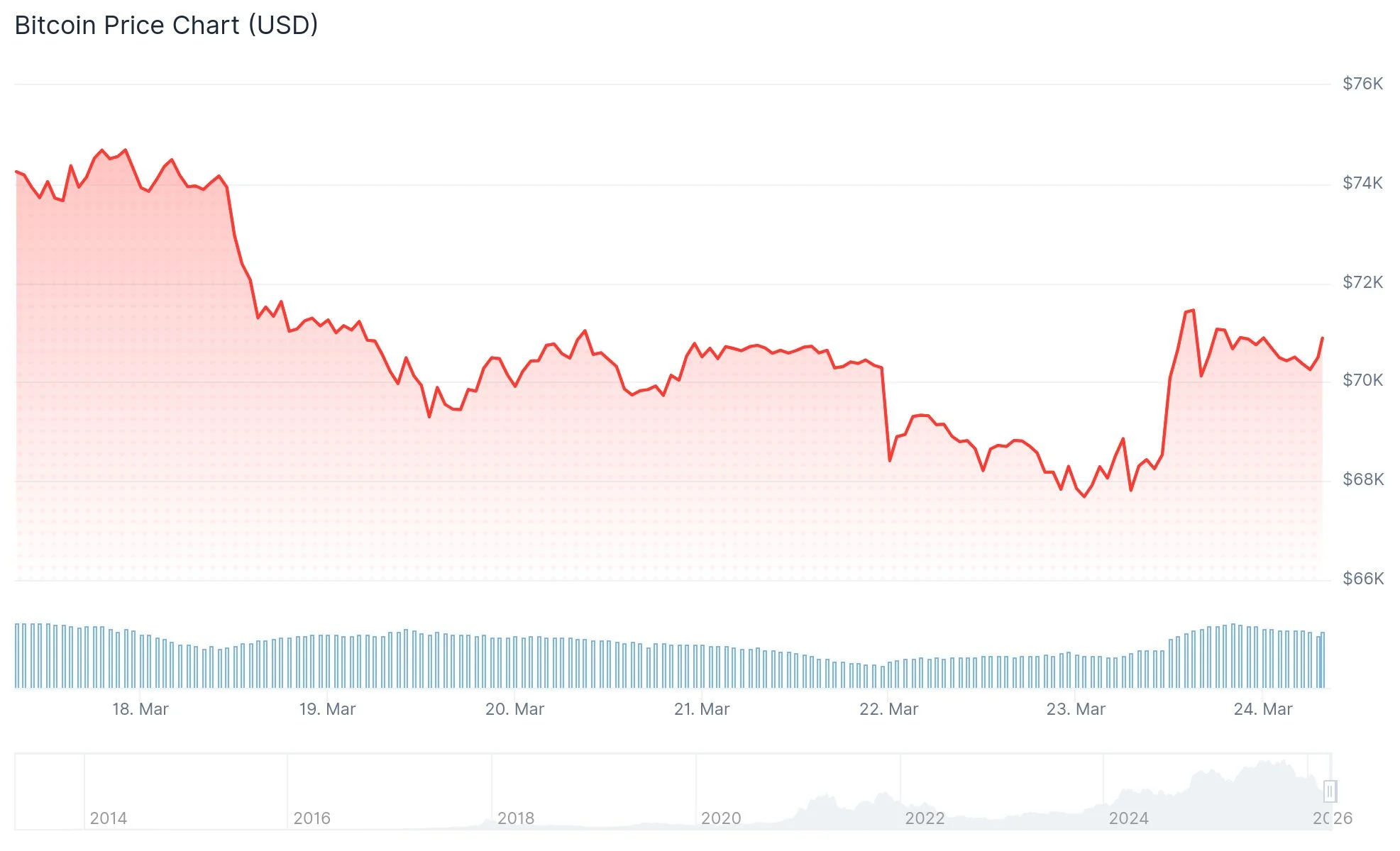
Bitcoin advanced 3.1% to reach $70,352 on Tuesday, recovering from its weekend decline that pushed prices below $68,000. Other major cryptocurrencies including Ether, Solana, Dogecoin, and XRP posted gains ranging from 2% to 4%.
The cryptocurrency rebound occurred despite weakness in conventional financial markets. S&P 500 futures retreated 0.5%. European equity indices were positioned to open down 0.8%.
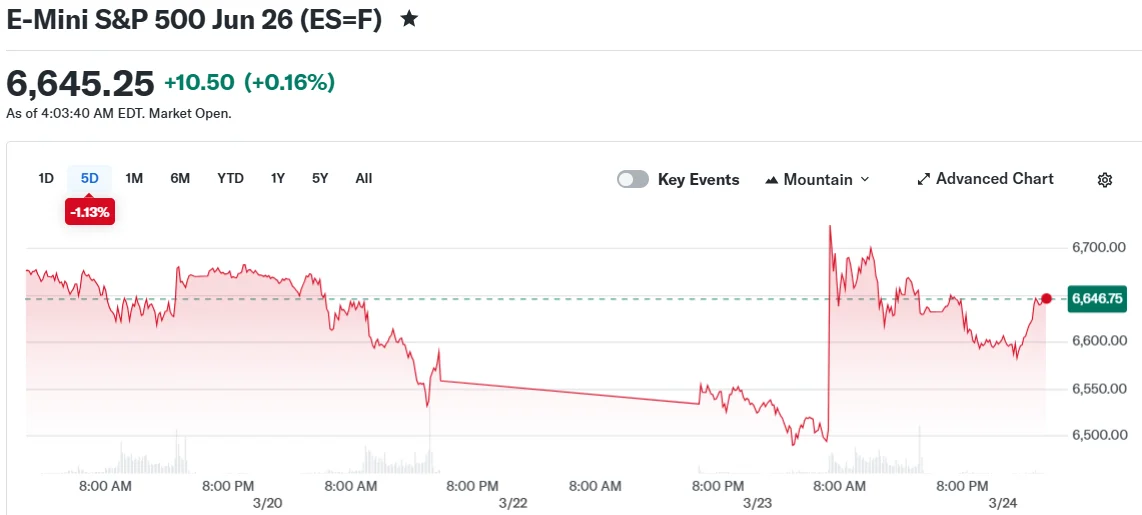
Financial markets had experienced significant gains on Monday following President Trump’s characterization of discussions with Iran as “very good and productive.” The Dow Jones Industrial Average surged more than 1,100 points during peak trading hours.
However, that positive sentiment proved short-lived. Iranian state-controlled media contradicted the claims, asserting that no direct diplomatic engagement had occurred. Iran’s deputy parliamentary speaker additionally rejected the possibility of negotiations with the United States.
The Wall Street Journal disclosed Tuesday that Saudi Arabia has authorized U.S. military access to King Fahd Air Base. This represents a significant policy reversal from Saudi Arabia’s previous stance prohibiting the use of its facilities in actions against Iran. The United Arab Emirates implemented comparable measures.
Energy markets reacted dramatically. Brent crude surged 4% to approximately $104 per barrel on Tuesday. This followed Monday’s substantial decline, when Brent plummeted nearly 11% amid optimism about potential peace negotiations.
West Texas Intermediate crude had similarly dropped roughly 10% on Monday, settling around $88 per barrel, before experiencing modest gains in after-hours trading.
The critical Strait of Hormuz remains essentially blocked, with only minimal vessel traffic successfully navigating the passage.
Gold’s Historic Decline Puzzles Analysts
Gold decreased 1.5% on Tuesday, continuing what has become its longest consecutive daily decline in recorded history. The retreat of a traditional safe-haven asset during active military conflict represents an anomaly.
The predominant explanation centers on forced liquidation by investment funds confronting margin requirements, with gold representing the most liquid holding available for sale.
Bitcoin‘s stability relative to gold’s decline has attracted considerable attention. Cryptocurrency traditionally exhibits greater volatility, yet this week it has proven more stable than the precious metal.
Market Outlook
President Trump established a five-day deadline for Iranian action, set to expire Saturday. Saudi Arabia’s entry into the conflict fundamentally alters the strategic landscape, exposing petroleum infrastructure throughout the Gulf region to heightened risk.
Market participants are also monitoring U.S. manufacturing statistics scheduled for release Tuesday morning. GameStop is expected to announce quarterly earnings following Tuesday’s market close.
Futures contracts tied to the S&P 500, Dow Jones, and Nasdaq 100 were trading marginally above breakeven levels early Tuesday morning.
