




TLDR
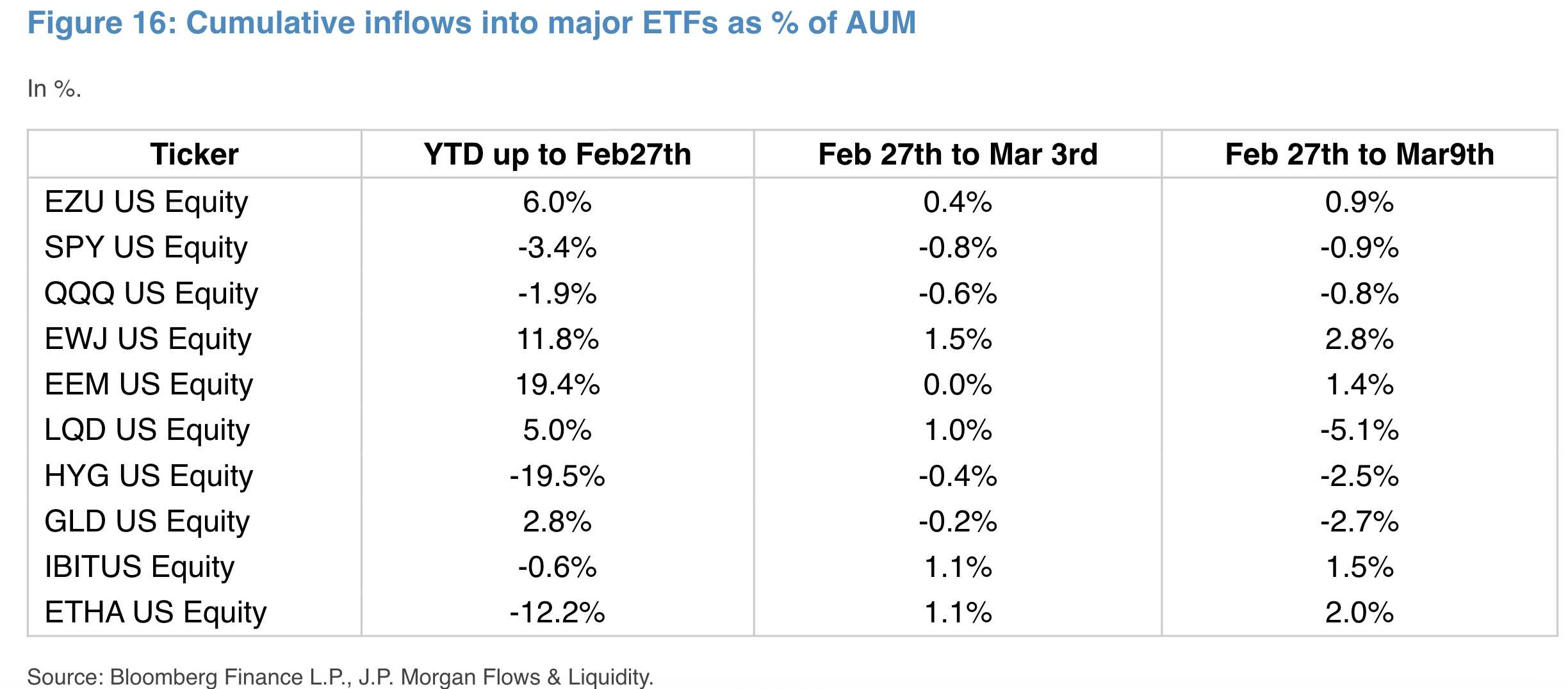
- Gold ETF outflows reached 2.7% of total assets while Bitcoin ETF inflows climbed 1.5% since the outbreak of the Iran conflict
- GLD, the leading gold ETF, experienced a staggering $3 billion exodus on March 6, marking its largest single-day withdrawal in two years
- In the 30 days ending March 11, Bitcoin ETFs attracted $906 million in net capital, a dramatic turnaround from the previous month’s $1.9 billion in outflows
- JPMorgan’s research team highlighted Bitcoin’s declining volatility as institutional participation increases
- Historical patterns show Bitcoin gains an average of 54% during the 12-month period after US midterm elections
A dramatic shift in capital allocation has emerged since the Iran conflict escalated in late February, with investors abandoning traditional safe-haven gold positions in favor of digital asset exposure through Bitcoin funds.
SPDR Gold Shares (GLD), the market’s dominant spot gold ETF, has witnessed outflows representing approximately 2.7% of its total assets under management. In stark contrast, BlackRock’s iShares Bitcoin Trust (IBIT), the flagship spot Bitcoin ETF, accumulated inflows totaling around 1.5% of its asset base during the identical timeframe. These findings emerge from research conducted by JPMorgan’s analytical team, headed by managing director Nikolaos Panigirtzoglou.
The March 6 trading session saw GLD hemorrhage $3 billion in a single day. According to data from The Kobeissi Letter, this represented more than triple the magnitude of any daily redemption recorded during the preceding 24-month period.
Bitcoin ETFs painted a completely different picture. By March 11, the 30-day net inflow metric had climbed to $906 million, a sharp reversal from the $1.9 billion in net outflows documented just one month prior. When measured in native Bitcoin units, ETF holdings also turned positive with an increase of 12,909 BTC, recovering from the previous period’s decline of 34,197 BTC.
This capital flow reversal eliminated gold ETFs’ year-to-date advantage over Bitcoin ETFs that existed before the Iran situation intensified.
Institutional Positioning Has Shifted
JPMorgan’s analysis revealed that between October of last year and early 2026, a notable rotation occurred from Bitcoin exposure into gold holdings, with retail investors leading the charge. Throughout this window, IBIT experienced redemptions while GLD benefited from substantial capital inflows.
However, the recent pivot extends beyond simple ETF flow dynamics. Short interest metrics for IBIT climbed in recent months while corresponding short interest in GLD decreased. Analysts interpret this as evidence that hedge funds and sophisticated institutional participants reduced Bitcoin allocations while increasing gold positions during that earlier phase.
The put-to-call ratio for IBIT options also climbed above GLD’s equivalent measure and has remained elevated since November, representing the first extended period where Bitcoin ETF derivatives showed greater demand for downside hedging compared to gold ETF options.
Despite the temporary caution exhibited earlier, Bitcoin ETFs maintain their lead over gold ETFs in aggregate cumulative inflows dating back to 2024. IBIT’s total capital attracted since inception approximately doubles that of GLD during the comparable period.
Bitcoin Volatility Is Compressing
JPMorgan’s research team also observed that Bitcoin’s volatility characteristics are exhibiting signs of compression. They credit this development to increased institutional ownership depth and enhanced market liquidity conditions.
Michaël van de Poppe, founder of MN Capital, identified a bullish divergence pattern in the Bitcoin-to-gold ratio’s relative strength index on daily timeframes. The ratio recently tested a critical support zone near the 12-13 level, an area that functioned as resistance during 2017 before transforming into support throughout 2022 and 2023.
Options-implied volatility measurements for GLD have escalated more dramatically than comparable metrics for IBIT in recent months, indicating market participants anticipate larger price fluctuations in gold assets.
Binance Research characterized the present market conditions as representing “opportunity within risk” for Bitcoin, observing that BTC has tracked macro assets including crude oil and US equities since the Iran conflict commenced.
Bitcoin ETF trading volumes from US spot products have expanded recently. Nevertheless, US spot ETFs currently represent only approximately 9% of aggregate Bitcoin spot trading volume, significantly below the 30-40% ETF penetration observed in US equity markets.
Historical data demonstrates that the 12-month windows following US midterm elections have never yielded negative returns for the S&P 500 since 1939, posting average advances of 19%. Bitcoin has delivered an average 54% surge across all three post-midterm election years in its trading history.
JPMorgan’s analytical team reaffirmed their long-term Bitcoin valuation target of $266,000, derived from a volatility-adjusted comparative framework relative to gold.
