



TLDR
- National gas average surged nearly $0.50 in one week, reaching $3.48 per gallon
- Crude oil prices surpassed $110/barrel following near-complete stoppage of Strait of Hormuz tanker movement
- Industry analyst projects 80% probability of $4/gallon gas within 30 days
- Diesel prices jumped to $4.66/gallon from $3.77 in just seven days
- Financial institutions warning of potential stagflation as energy costs surge amid weakening employment figures
American motorists are experiencing a dramatic spike in fuel costs as Middle Eastern hostilities severely impact worldwide petroleum distribution. Monday’s national average reached $3.48 per gallon, climbing from $2.99 seven days earlier.
This represents approximately a 17% increase since February 28, when U.S.-Israeli military operations against Iran commenced.
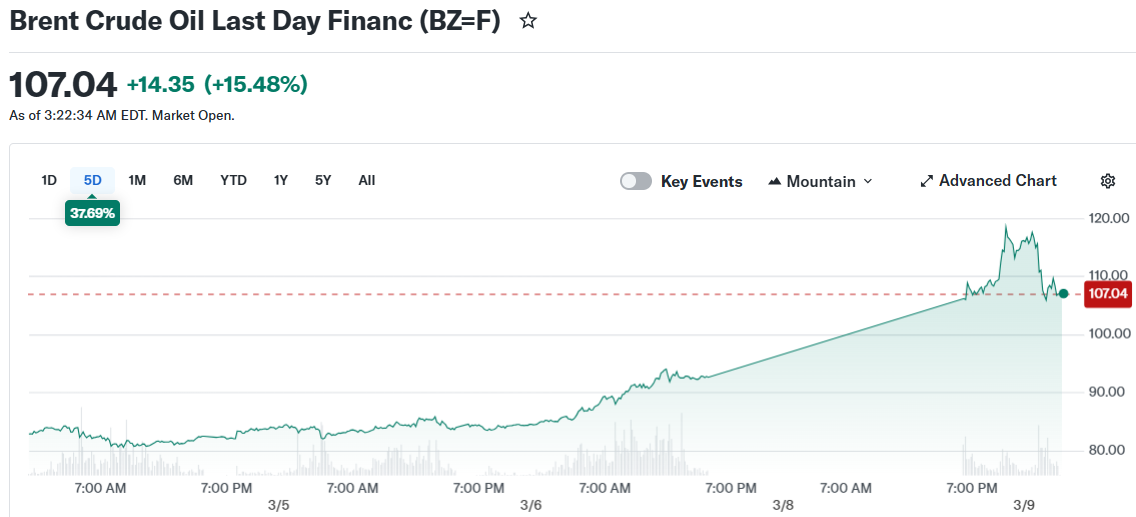
Crude oil markets saw prices breach $110 per barrel Sunday evening. The surge followed an effective shutdown of tanker movement through the Strait of Hormuz. This critical waterway typically transports roughly 20% of global oil supplies.
Tehran announced additional missile launches targeting Israel, characterizing them as retaliation for what it calls escalating U.S.-Israeli military actions. The confrontation has now entered its second week.
Patrick De Haan, a petroleum analyst with GasBuddy, stated Sunday that he estimates an approximately 80% likelihood the national average will reach $4 per gallon before the end of next month. He projected this week alone could see prices climb to a range of $3.75 to $3.95.
The previous instance of $4 per gallon gas occurred in August 2022.
Economists note that each $10 increase in crude oil prices translates to roughly $0.25 additional cost per gallon for consumers. With crude now exceeding $100, the financial impact is mounting rapidly.
American consumers are collectively spending approximately $187 million more daily on gasoline compared to last week.
Diesel Costs Climbing Even Faster
Diesel fuel is experiencing more rapid price escalation than regular gasoline. Monday’s national diesel average stood at $4.66 per gallon, up from $3.77 the previous week.
De Haan estimates an 85% probability that diesel will hit $5 per gallon nationally, potentially as early as this week. This would mark the first occurrence since December 7, 2022.
Elevated diesel prices have implications extending far beyond individual drivers. The vast majority of American commerce relies on diesel-powered freight transportation. When diesel becomes more expensive, shipping expenses increase, and retailers transfer these costs to consumers through higher product pricing.
This dynamic means groceries, apparel, building supplies, and numerous other goods could become more expensive.
Stagflation Fears Grow on Wall Street
Escalating energy expenses are generating widespread economic anxiety. JPMorgan analysts communicated to clients Monday that “concerns about stagflation are rising in the U.S.”
Stagflation describes an economy experiencing simultaneous high inflation and stagnant growth. Nigel Green, CEO of deVere Group, characterized this scenario as a “toxic combination” representing a “very real possibility.”
Green explained that rapid energy price increases trigger broad-based inflation acceleration. Businesses confront elevated operating costs, consumers face larger bills, and economic expansion decelerates simultaneously.
Regional pricing disparities remain significant. California motorists paid $5.20 per gallon Saturday, representing the nation’s highest rate. Kansas drivers enjoyed the lowest price at $2.92.
