




TLDR
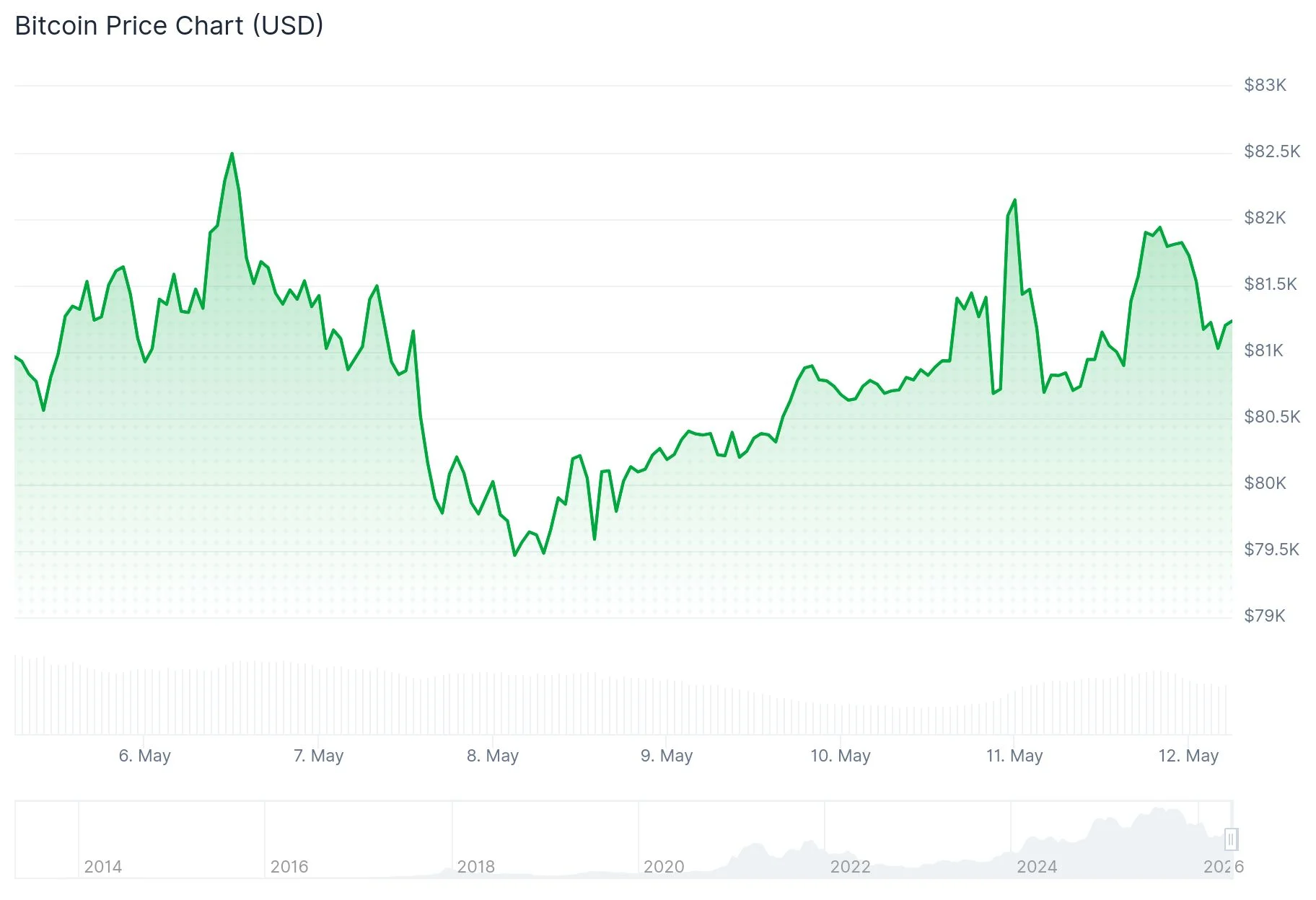
- Bitcoin reached an overnight peak of $82,026 before stabilizing around $81,000 early Tuesday
- Altcoins showed strength with Solana and Dogecoin posting approximately 2% gains
- Legendary investor Michael Burry drew parallels between current Nasdaq 100 valuations at 43x earnings and the dot-com era
- Brent crude surged past $105 per barrel amid escalating concerns over US-Iran ceasefire stability
- US equity futures declined Tuesday as investors anticipated the critical April CPI inflation data release
Bitcoin maintained its position slightly above $81,000 during Tuesday’s early trading hours following a brief overnight spike to $82,026. This price action unfolded against a backdrop of retreating global equity markets and a sobering valuation warning from renowned investor Michael Burry.
Among major digital assets, Solana and Dogecoin emerged as top performers, each posting approximately 2% gains throughout the session. BNB climbed 1.7% to reach $662, XRP registered a modest 0.9% increase to $1.46, while Ether experienced a 0.8% decline.
Digital currency markets demonstrated remarkable stability despite a shift toward risk-averse sentiment across traditional financial markets. Market participants are now closely monitoring Tuesday morning’s release of the US April Consumer Price Index report, seeking insights into economic trajectory and potential interest rate adjustments.
Michael Burry, the legendary investor famous for forecasting the 2008 financial crisis, published a cautionary message on Substack drawing comparisons between current market conditions and the dot-com bubble. He highlighted that the Nasdaq 100 currently trades at 43 times earnings, significantly exceeding his estimated fair valuation of approximately 30 times.
Burry specifically cited the Philadelphia Semiconductor Index, which has surged 70% since late March, as evidence of market overheating. He advised investors to realize gains and reduce positions in artificial intelligence-related equities.
“Wall Street may be overstating by more than 50% the earnings at our fastest growing, most highly valued companies,” Burry wrote.
Macro Pressures Building
Oil prices contributed additional pressure to market sentiment. Brent crude advanced nearly 1% to exceed $105 per barrel following President Trump’s Monday comments expressing skepticism about the Iran ceasefire agreement. He characterized the deal as being on “massive life support” after declining the most recent peace proposal.
Elevating crude oil prices intensify inflation worries, potentially compelling the Federal Reserve to maintain elevated interest rates for an extended period. The 10-year Treasury yield climbed to 4.42% while the dollar appreciated against major international currencies.
Asian stock markets experienced declines. South Korea’s Kospi plummeted as much as 5.1% during intraday trading following statements from a senior policymaker regarding potential taxation on AI profits to finance citizen dividend programs. European futures indicated a 0.6% decline at market opening.
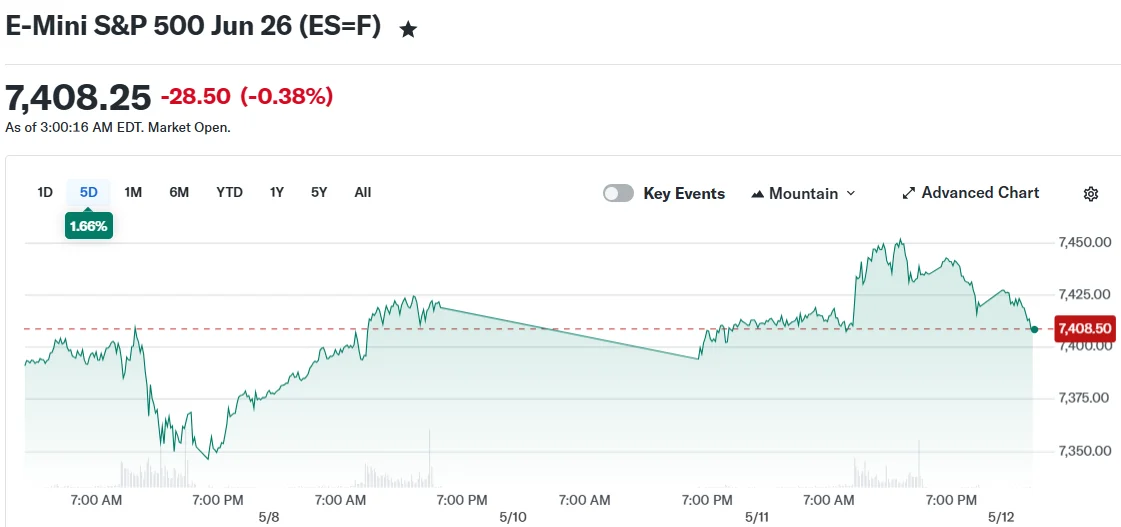
US equity futures also trended downward Tuesday. S&P 500 futures decreased 0.1% and Nasdaq 100 futures dropped 0.3%, despite Monday’s record-high close for the S&P 500.
What’s Coming Next
The S&P 500 had accumulated gains exceeding 16% during a six-week consecutive winning streak, marking its most powerful performance run since the global financial crisis period.
Economic analysts forecast the April CPI report will reveal inflation climbing to 3.7%. An inflation reading surpassing expectations could generate downward pressure on both equity and cryptocurrency markets.
President Trump is scheduled to commence a diplomatic visit to China on Tuesday for discussions with President Xi Jinping. Trade policy and artificial intelligence development are anticipated to dominate the bilateral agenda, with senior executives from Tesla and Apple among the delegation members.
Corporate earnings announcements are scheduled this week from Applied Materials, Cisco Systems, Alibaba Group, and Birkenstock.
Bitcoin’s subsequent price direction will likely hinge on the inflation data outcome and whether geopolitical tensions experience de-escalation.
